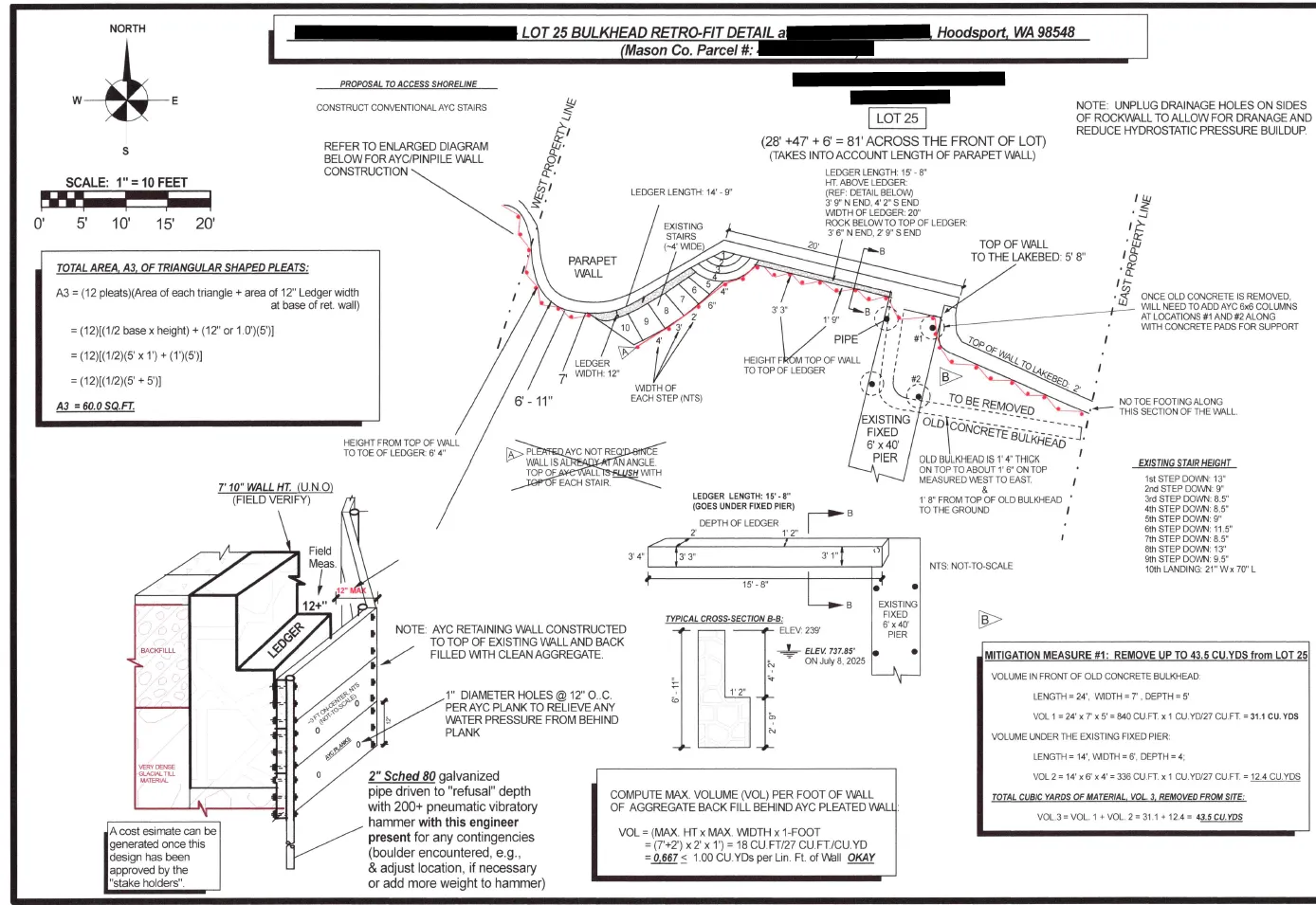
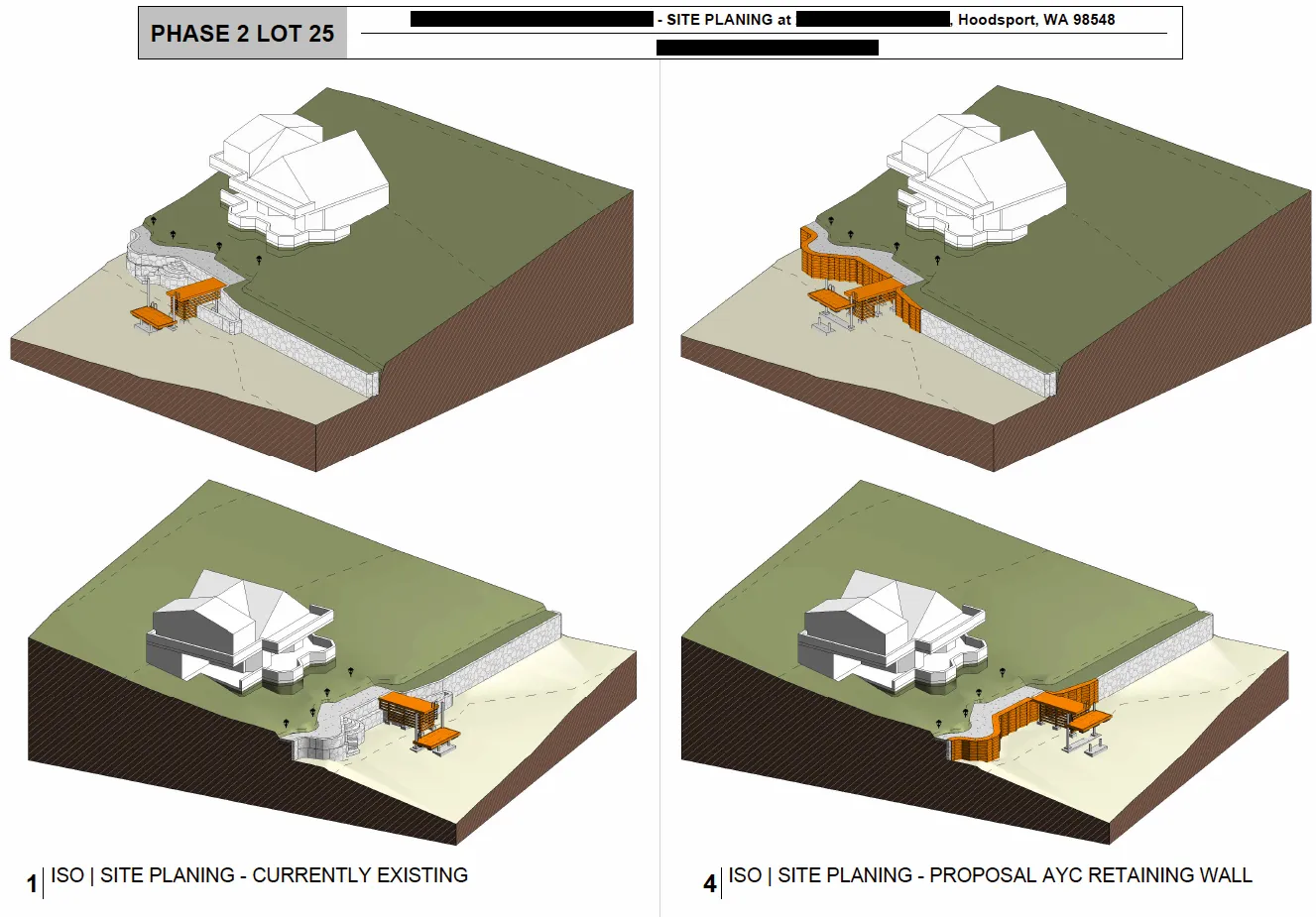
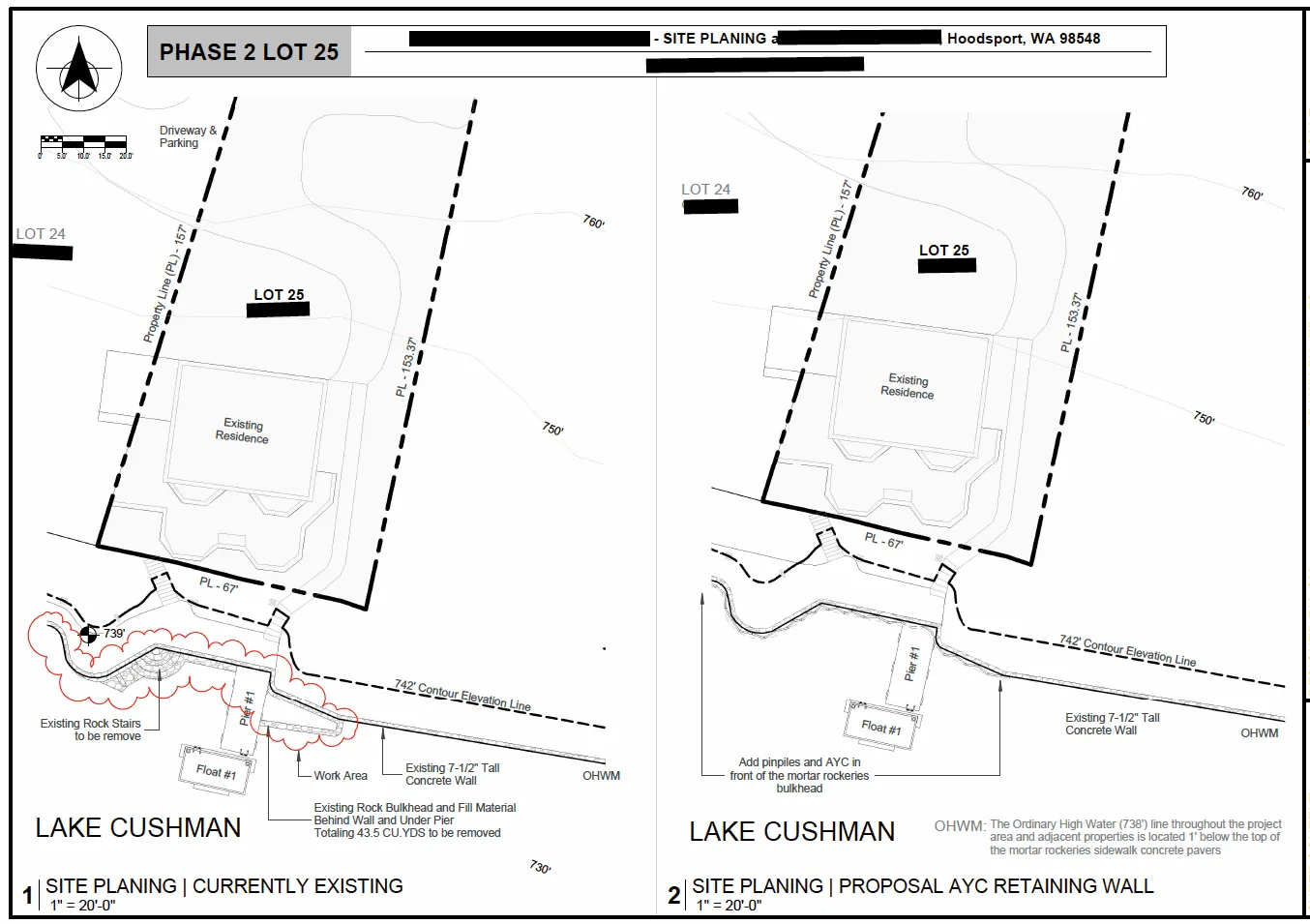
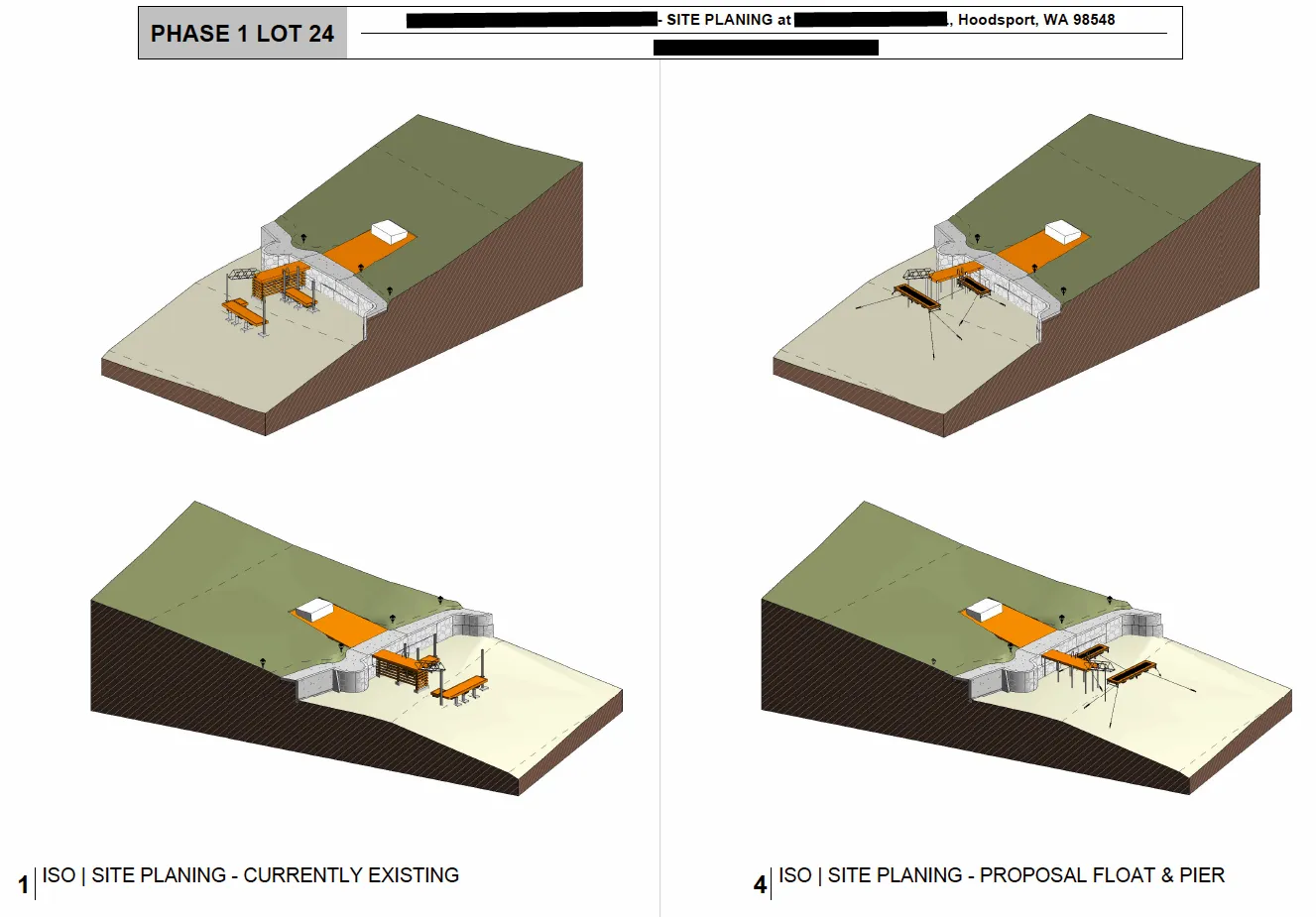
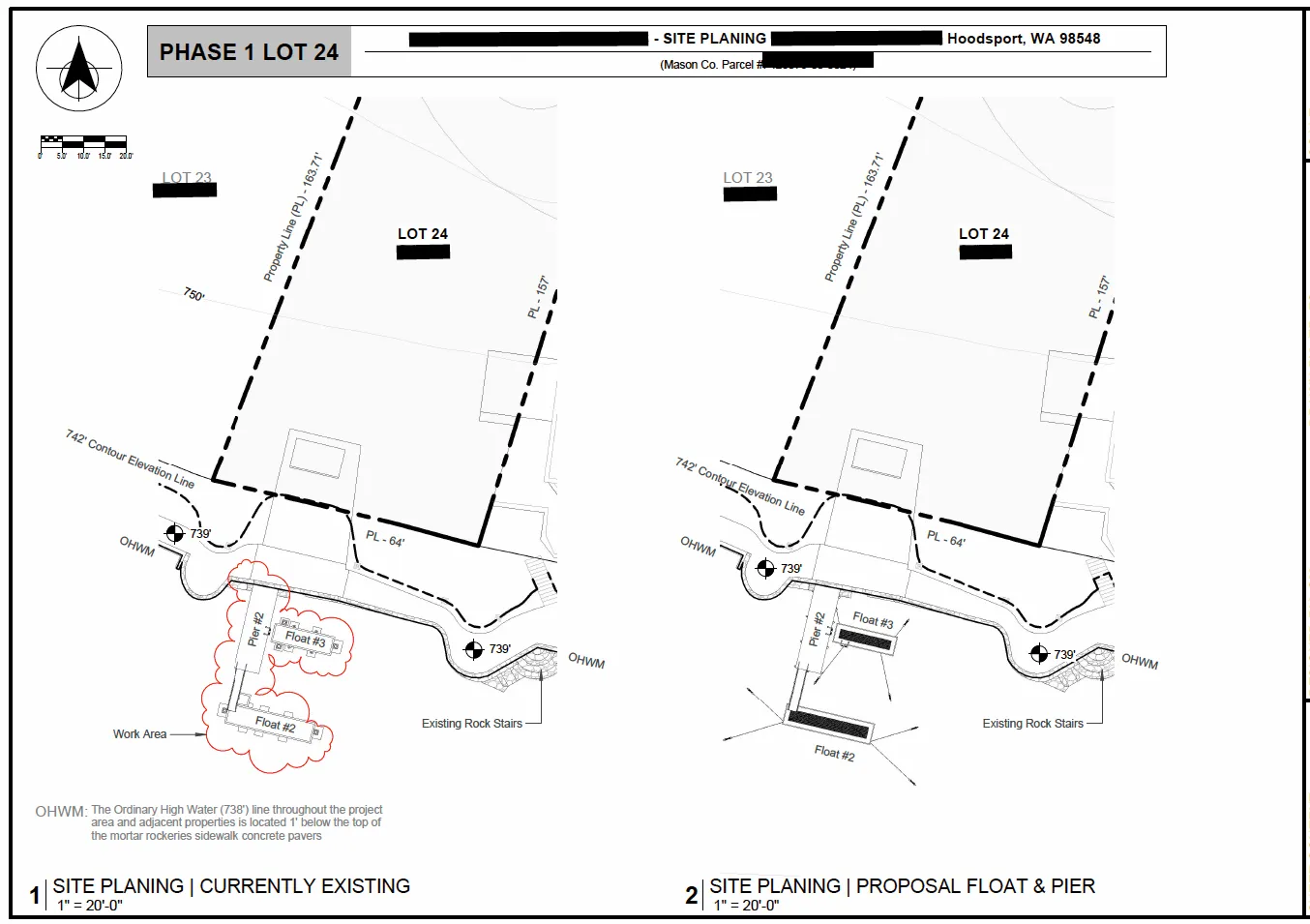
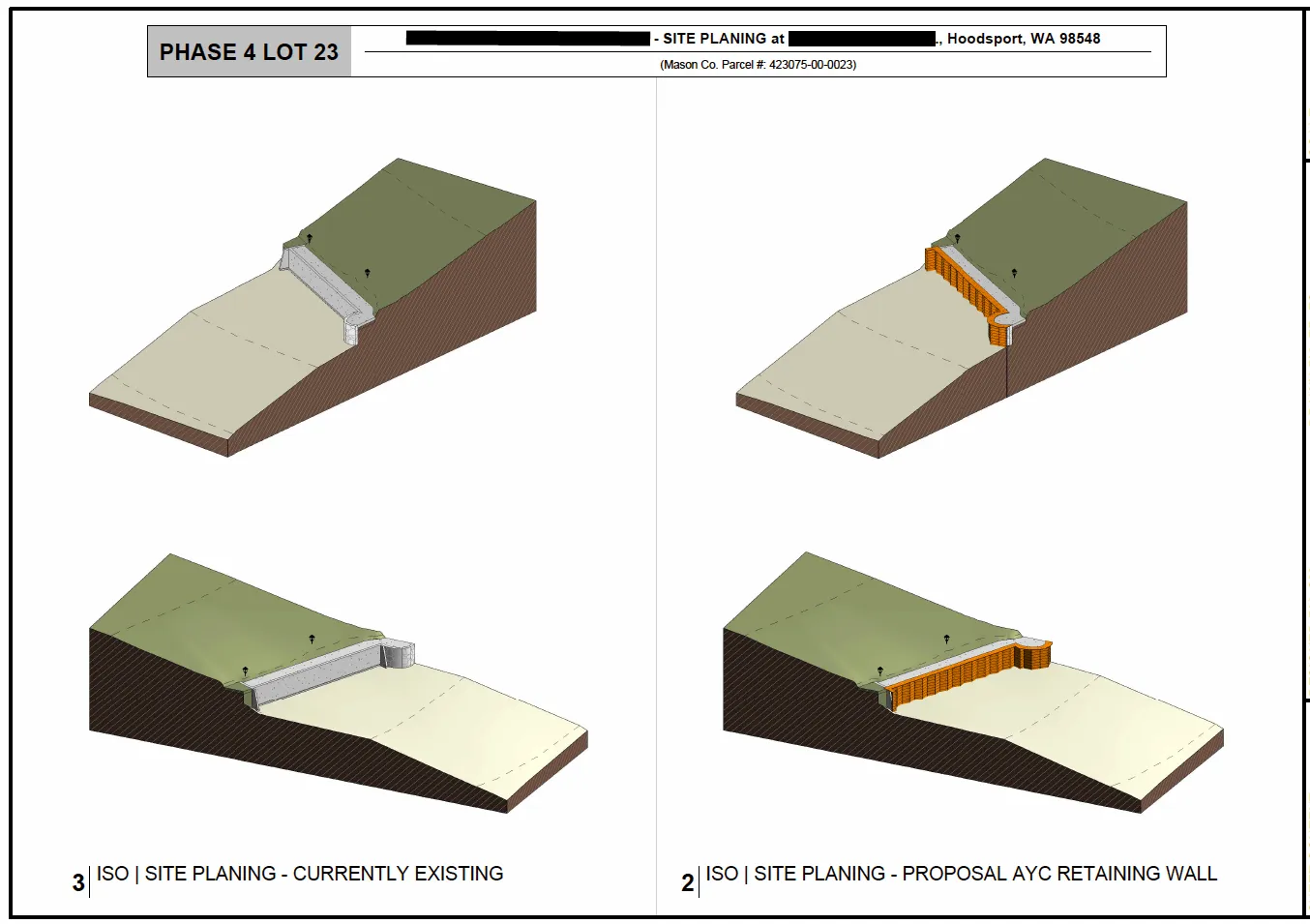
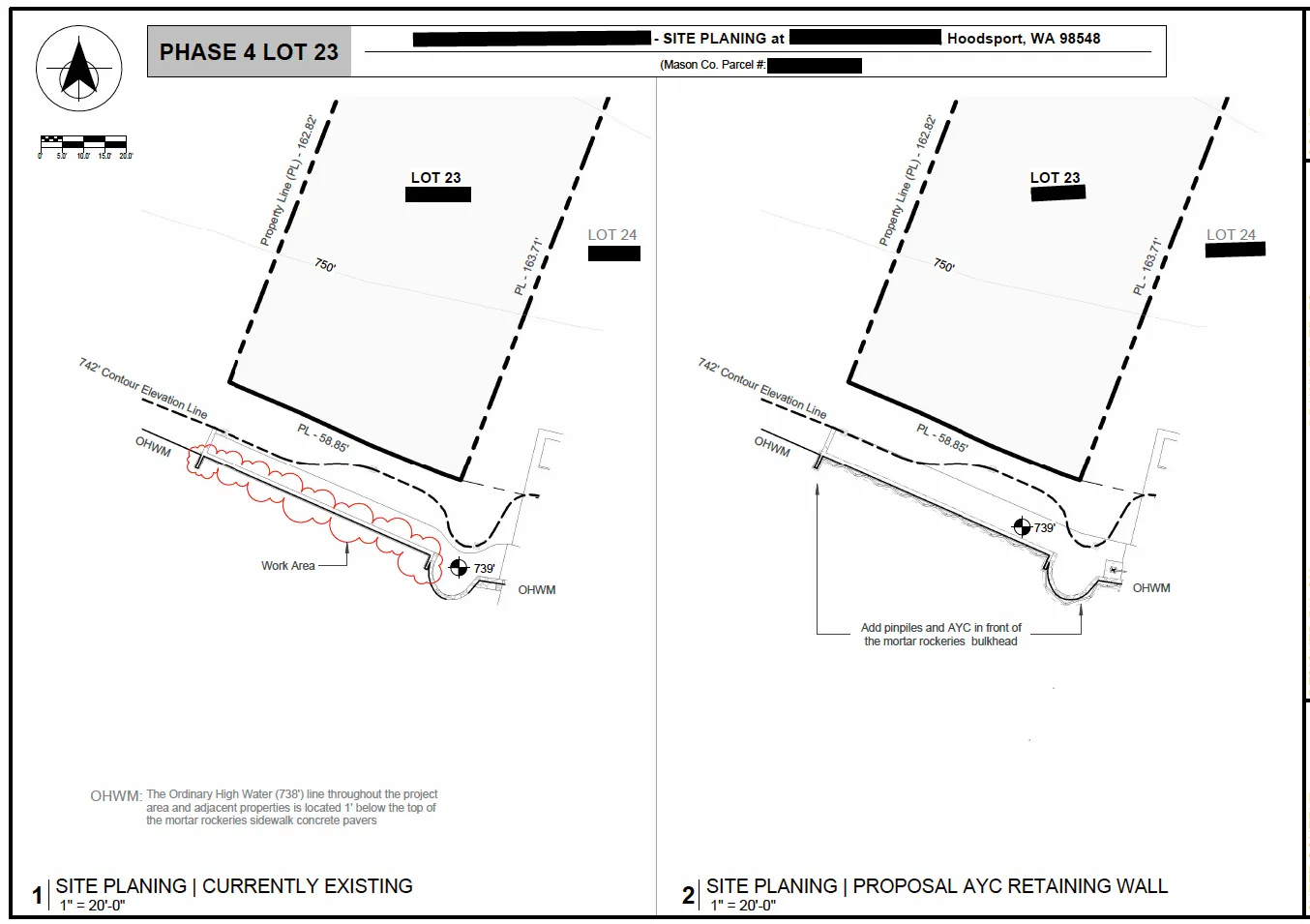
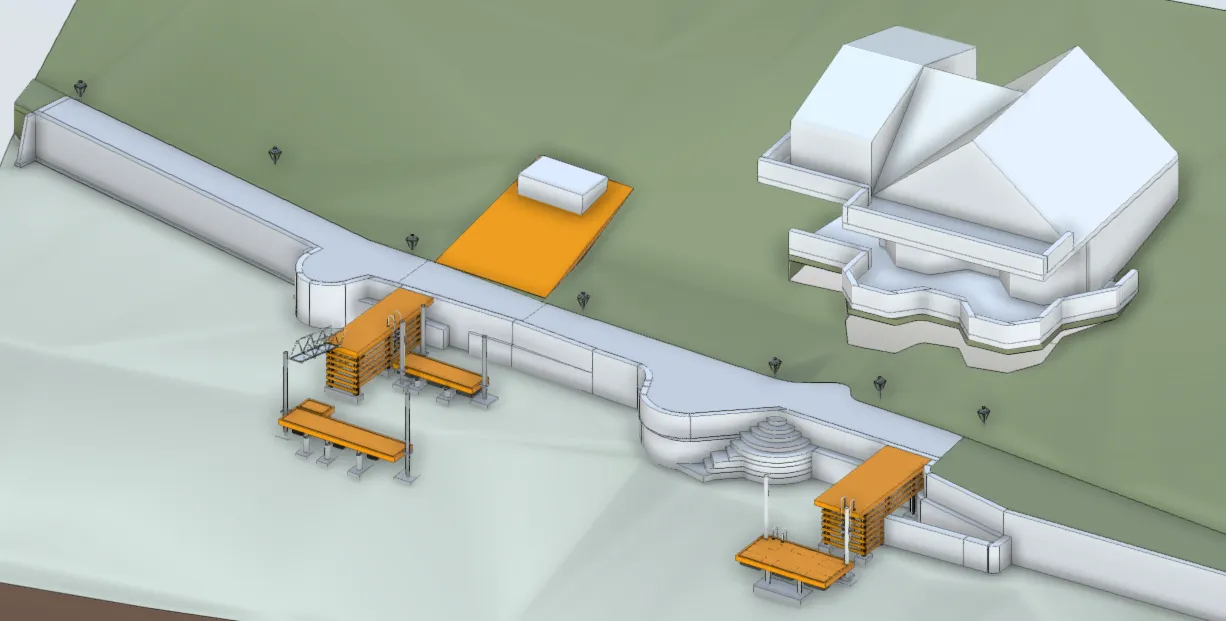
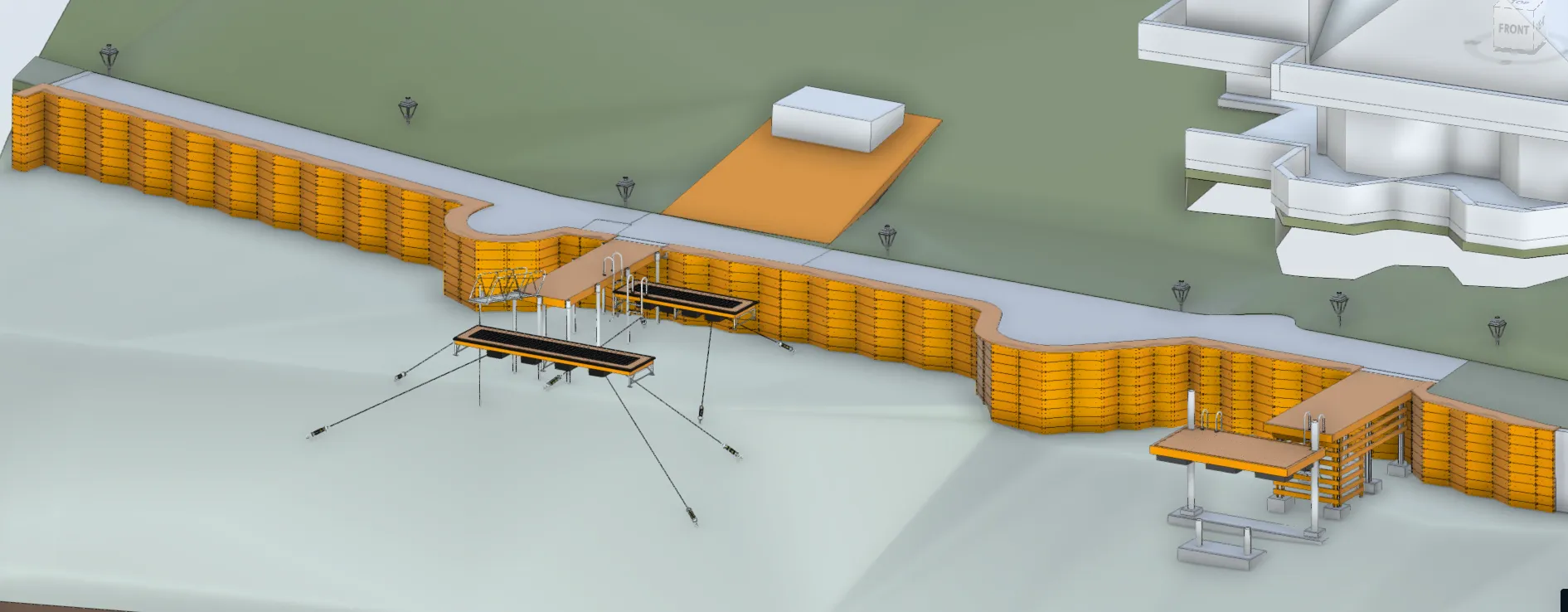
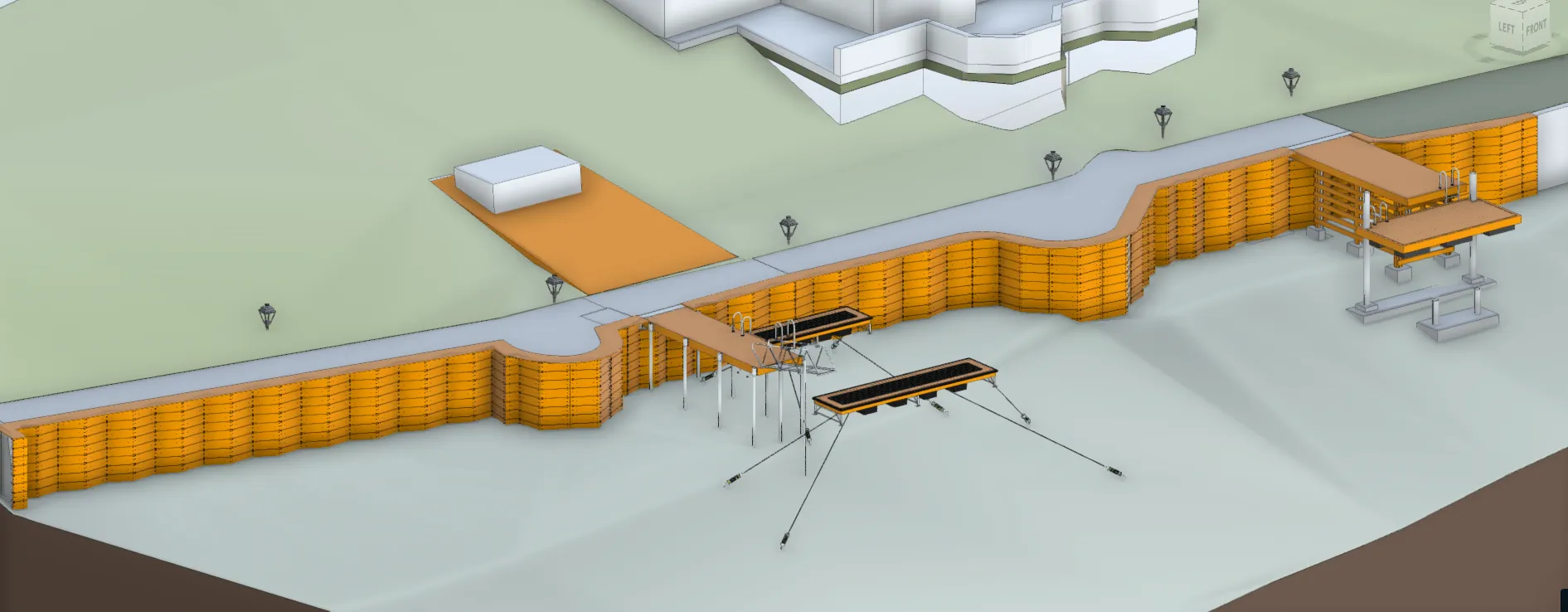
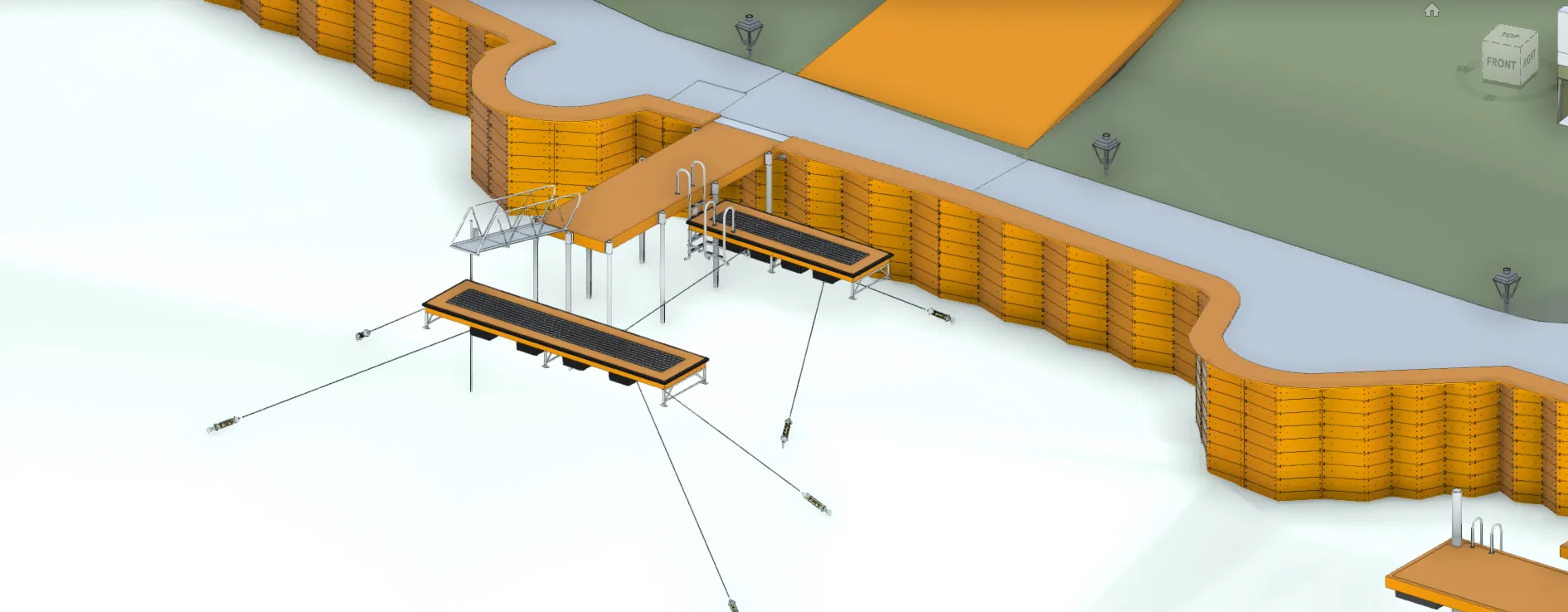
This regenerative shoreline project in Lake Cushman, Washington, transforms years of fragmented documentation and unpermitted shoreline structures into a unified, buildable, and regulatory-approved vision. Working with engineer Steve Morta, P.E., Gabriela Carnicero developed a fully coordinated Revit 3D model that integrates technical accuracy, environmental awareness, and long-term shoreline resilience. The renderings were produced by Francisco Santana, Engineer and Revit Specialist, and Esther Romero, Architect and Revit Specialist, who brought the model to life with detailed visualization and spatial precision.
Revit Modeling and Technical Drafting
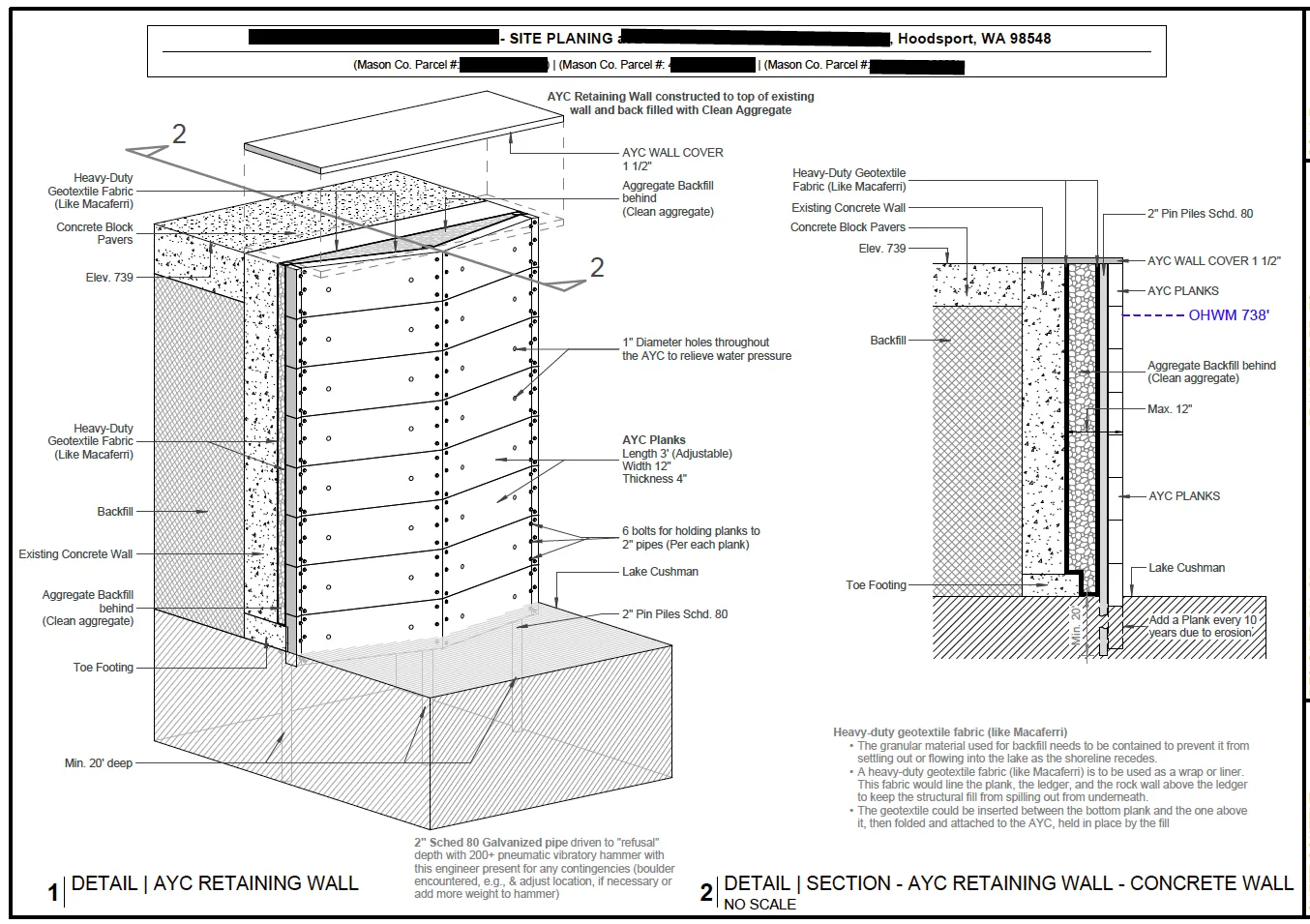
Gabriela rebuilt the site using as-built data, historical notes, and field observations to create a precise 3D model that represents existing conditions, mitigation requirements, and proposed interventions. The 3D model was used to optimize mitigation improvements and design iterations two to three times, ensuring accuracy, buildability, and alignment with environmental goals before final submission.
Storyboard Documentation
A 'storyboard' approach connects the site's past, present, and future, including unrecorded structures, expired permits, and approved mitigation work, helping stakeholders and agencies understand the complete project history.
Regenerative Engineering Design
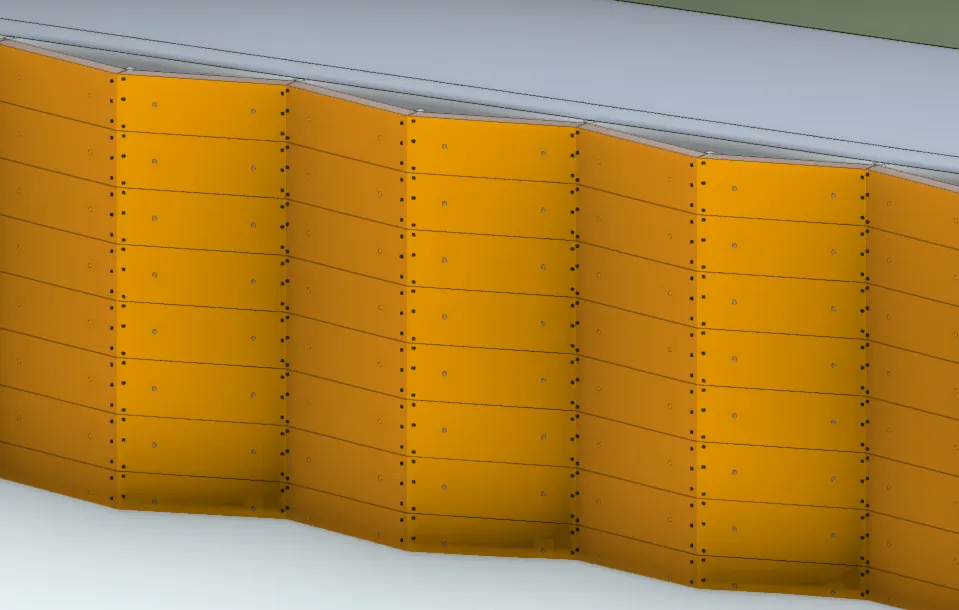
The project incorporates innovative shoreline protection systems such as Pleated AYC (Armor-Yield Concrete) Wall: it dissipates wave energy and preserves fish habitat while reducing erosion over time (by Steven P. Morta, PE). Elastic Mooring Dock System uses augers and flexible moorings that adapt naturally to lake level changes (by Seaflex Inc.).
Outcome
The 3D model provides visual clarity and technical accuracy, reducing back-and-forth with regulatory agencies and helping secure approvals for long-term shoreline protection.